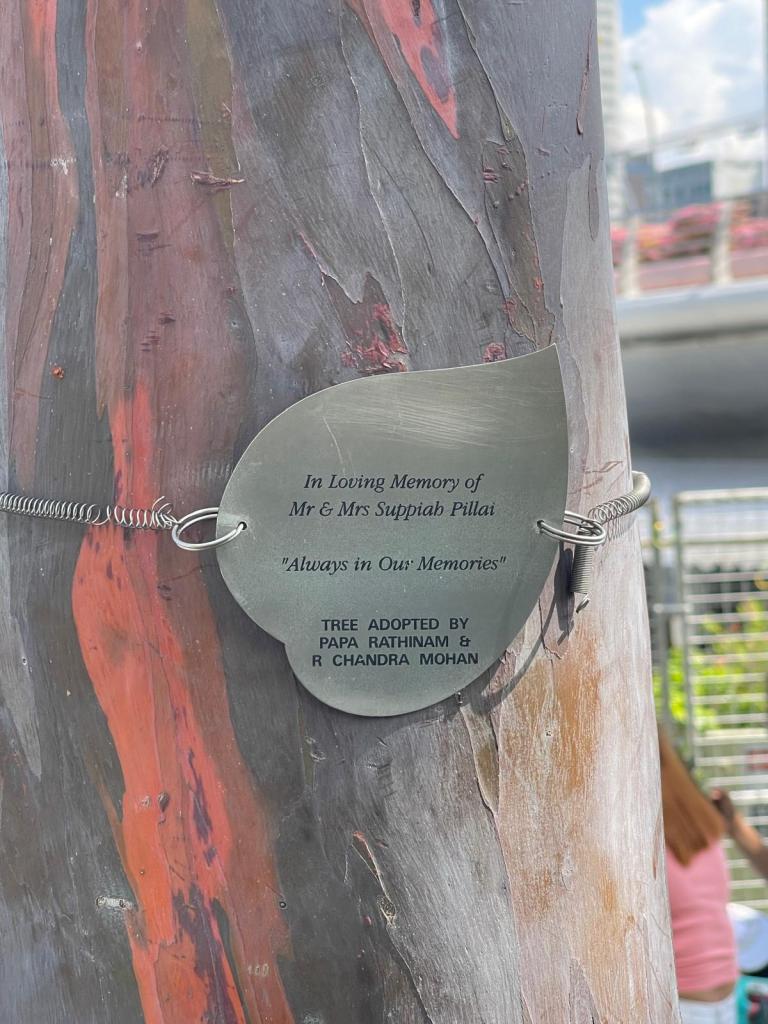
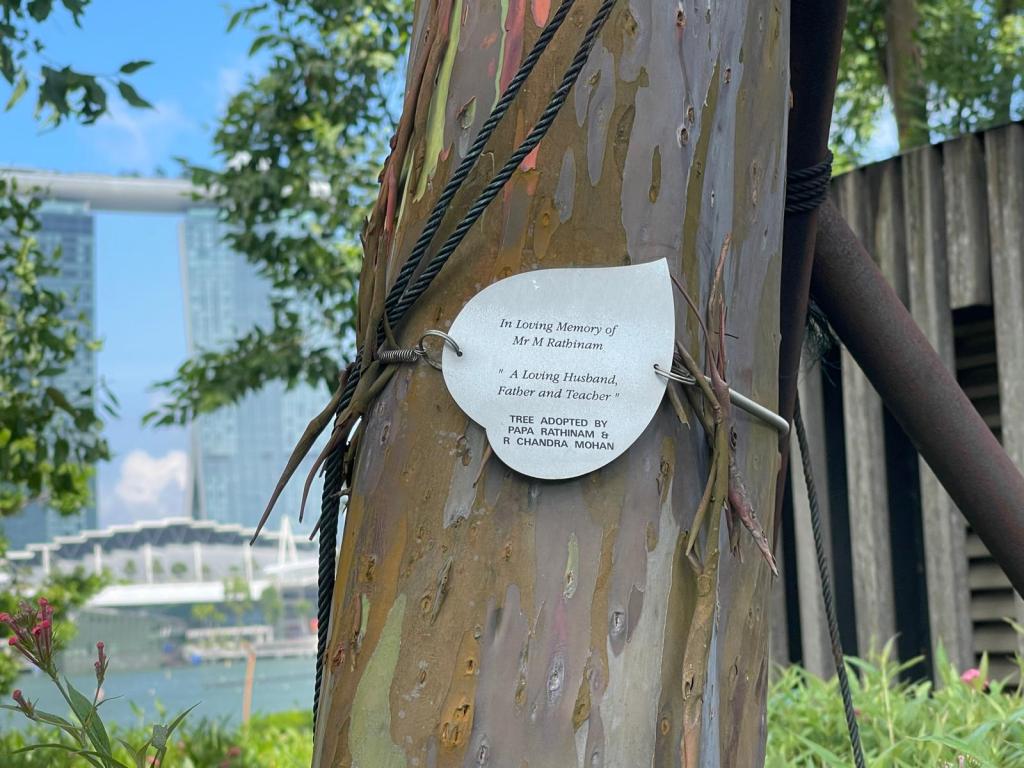
About 10 years ago, when Benson Puah was still the CEO of the Esplanade, he came up with a novel fundraising idea for the Esplanade.
There were a number of trees outside the Esplanade facing the waters and he said he would make each tree a memorial for the sum of $10,000.
Partly to support the Esplanade and him and to set up a small memorial for my grandparents and my father, I took up 2 trees in my name and that of my mother.
I have since visited the trees a few times over the years but the last time I went there was several years back.
My sister, who is back for a short visit, went there and sent me pictures of the plaques on the trees.
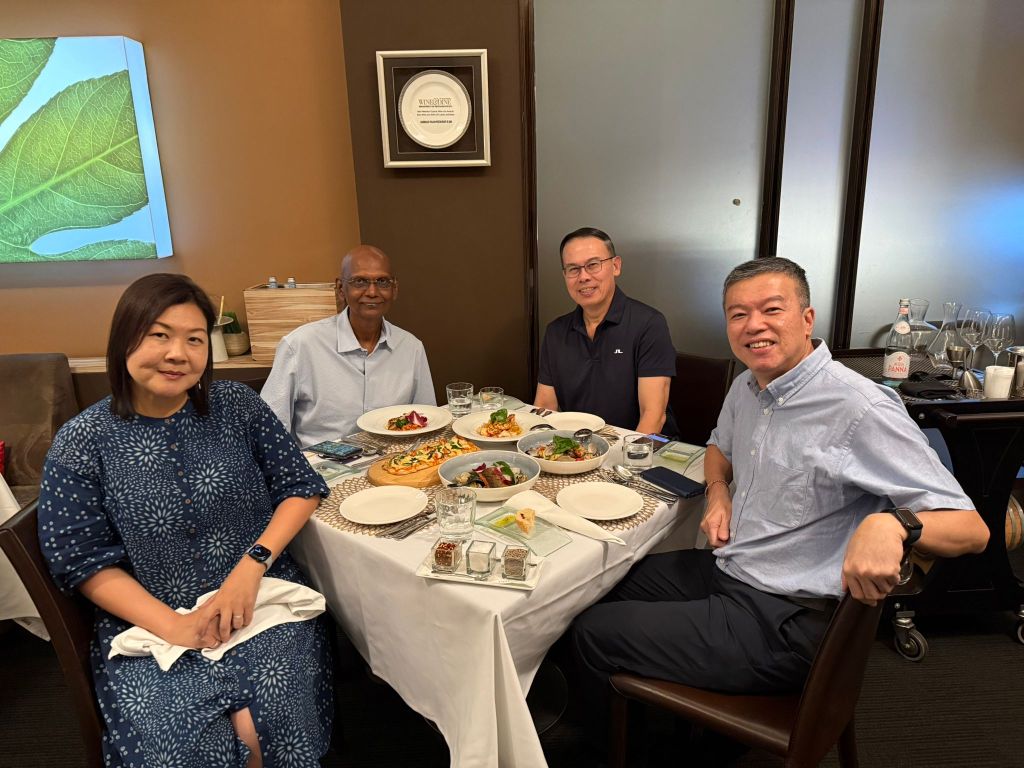
Last night was our regular catch up cum birthday celebration. This time it was Crystal’s birthday.
Someone suggested Garibaldi’s at Purvis Street and it was a good suggestion.
Good food. Not exactly the cheapest but fair and with a free valet service, which allows you to stop right in front of the restaurant, hand the over keys to the valet and walk right in.
As always conversation was good but this time Mei Ling could not make it.
As usual , I saw many lovely things from all over the world.
My sense was that prices were lower and a number of dealers told me that they did more sales this because of the lower prices.
As usual , I saw so many things that I liked but on the final day I narrowed it down to 3 items ; a buccaletti bracelet with sapphires, a jadeite ring and a Russian alexandrite ring.
Spent far less than last year and that’s a relief!
Now hopefully I wear them more often to justify buying them.
Another pleasant lunch with him yesterday. He suggested an Indian restaurant at Singapore Flyer called Red Chilli’s. I have never been to this place or to the Flyer.
I must say the place is pleasant with a beautiful view and the lunch was a very well priced buffet.
We talked about so many topics. He is so well informed about Singapore and world affairs. And I think that is a testament to the quality of the Indian Foreign Service officers.
We talked about how the soft sell of Indian food can be improved here, especially with the Indian Biryani Festival and how India can focus on showcasing its prowess in the healthcare field here.
It is a pity they all have a short posting period of only 3 years here. Not much one can achieve in such a short time. But he is still young and I think he will go far in the Service.
My favorite jewelry fair started yesterday and will go on till Sunday at MBS.
I have attended this fair for years now since they started. It’s gotten bigger over the years and I now know so many of the exhibitors, whom I meet once a year.
There was a long queue waiting to get it. The registration was poorly handled and I was lucky someone came out and got me in. That should have been handled properly after all these years. Also the car park was a pain. Typical MBS. Both car park entrances were closed and I had to valet park. Ended up paying $54 for parking!!
So many beautiful items to see in one room!
I was tired yesterday still suffering from a bit of jet lag. And there is a limit to nice things one can desire to own (and afford). With all the exhibitors trying hard to get you to look at their items and buy something from them, I will have to disappoint most of them.
Anyway I will be there on Saturday and Sunday as well. Maybe I will see some things that catch my eye.
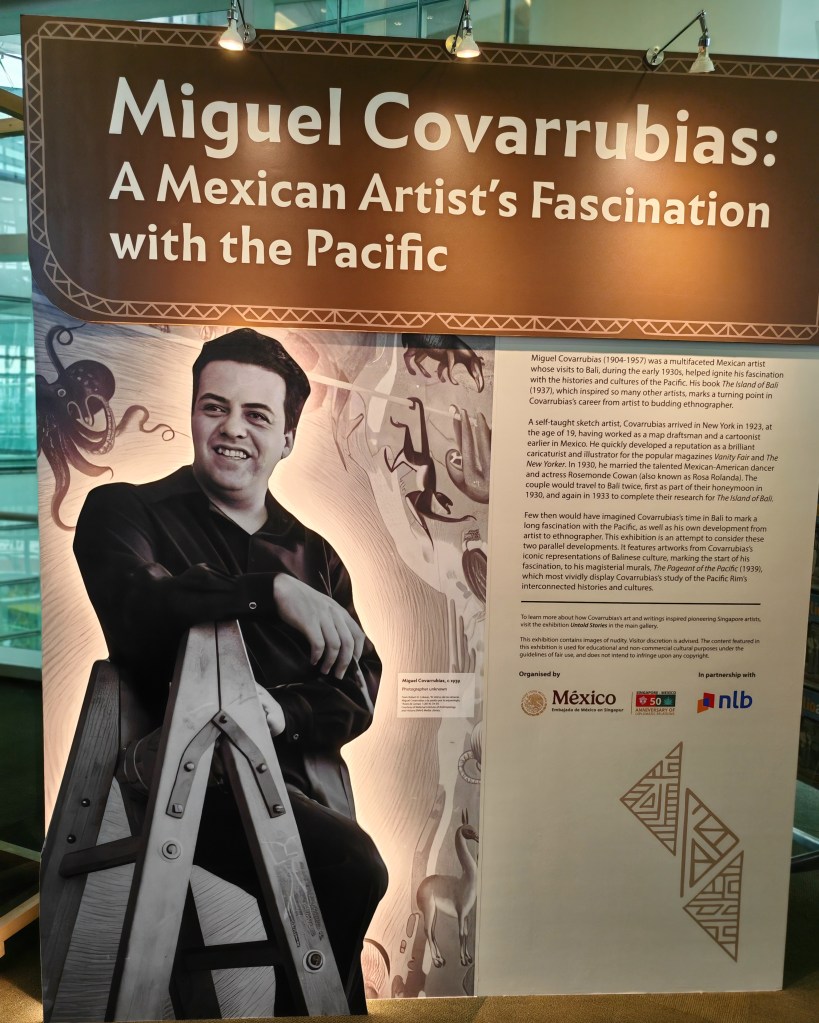
I was invited by the Mexican Embassy on the 8th of July for a simple exhibition of some works by Miguel Covarrubias, a Mexican artist, at the National Library.
I didn’t know why he was featured by National Library until the talk by the Mexican Ambassador.
So Miguel went to Bali in 1930 on his honeymoon and was so fascinated by the place that he stayed there for 9 months. He took pictures and studied their culture. He went again in 1934. Thereafter he wrote a handbook on Bali, published in 1937, which is still considered a definitive guide on Bali till today. It is called Island of Bali.
This book was purchased by Lui Kang in 1949. The book was found as part of his possessions together with the date of purchase.
In 1951, Lui Kang, together with 3 other artists, including Cheong Soo Pieng and Chen Wen Hsi, went to Bali for 9 weeks and thereafter had their exhibition of their art works done of their time in Bali in 1953 in Singapore. They are now considered part of the Nanyang art movement.
So the link to Singapore and Miguel was his book that Lui Kang purchased in 1949 before he went on his trip in 1951!
I had lunch yesterday with him. He is senior to me from the same school.
I knew his older brother Dennis in the 1990s when I first started work. I helped his brother and it was very nice of him to have remembered that.
A lovely catch up at a smallish Indian restaurant at Six Battery Road. We talked about so many different things…. Trump, practice, current state of politics, NCM, rental rates, Iswaran.
As I am leaving Germany now I wanted to pen down my thoughts on this country.
This is surprisingly my first visit to Germany. I have transited at Frankfurt airport many times but never entered the country. And I am glad I made the trip here.
It has been so different from what I imagined the country would be. I had such a different impression from what I have read online and what I heard from other people.
I first knew about West Germany when I was growing up. In primary school, I used to be crazy about football and the country I supported was West Germany. I used to watch their local football league matches on Sunday on tv and I watched them play and win the 1974 World Cup. I remember that was shown live and that was the first time Singapore telecasted in colour. Of course I could only watch it in black and white with my parents.
Back to my present trip which is now ending as I am at the airport.
The people are nice. Some of the most helpful and courteous people I have met in Europe. And they speak English everywhere. I remember going to France, Italy and Spain and I had so much difficulty communicating with people. No such problem here.
I had the best service anywhere in Europe. In the hotels, restaurants and in shops. The staff were pleasant, friendly and helpful.
They have good coffee and cafes everywhere. And the pastries are so good without being sweet. Open early some as early as 7 am. I have to mention the wonderful Lindt cafe in Frankfurt where I had a very good cup of coffee and dark chocolates.
The food everywhere was good. And not just sausages and schnitzels, which is what everyone told me would be the only thing I will find in Germany. Italian, Middle Eastern and even ordinary burgers were good and inexpensive. There was great chocolate everywhere, albeit Swiss ones, and so fresh.
I took the trains between cities. They were not always punctual in their arrivals but still I found it a more convenient way to get around without having to assert myself renting and driving a car
The taxis were the best anywhere. Clean, comfortable and spacious. The drivers were polite and friendly and knew their destinations well.
Every city I visited in Germany was clean. No vagrants or homeless people like in London, Paris or Rome. I felt very safe in Germany. I never worried about pickpockets or snatch theives.
Sundays are interesting. Practically all the shops are closed except for some cafes and restaurants. So on the way to the airport, there was no one on the streets and very few cars. Very peaceful. Something to think about when I see how busy everyone is on a Sunday in Singapore.
Supermarkets are superb. They have everything and things are much cheaper compared to Singapore.
Hotels I stayed in were good and comfortable but I guess that’s a function of the price you are prepared to pay so I shall not say much about that.
Beautiful art museums and galleries to walk into when avoiding the bright afternoon sun!
The Stadler Museum
They have embraced and welcomed people from everywhere. This morning my taxi driver was from Afghanistan. I have met Palestinians, Syrians, Turks and so many nationalities all working and living here with families.
Is it the guilt of the last war that has made them embrace people, even though it is not second nature to anyone when having to entertain a foreigner, I wonder.
Anyway it was a good trip and I am so glad I visited Germany. Given another chance, I will surely come here again.
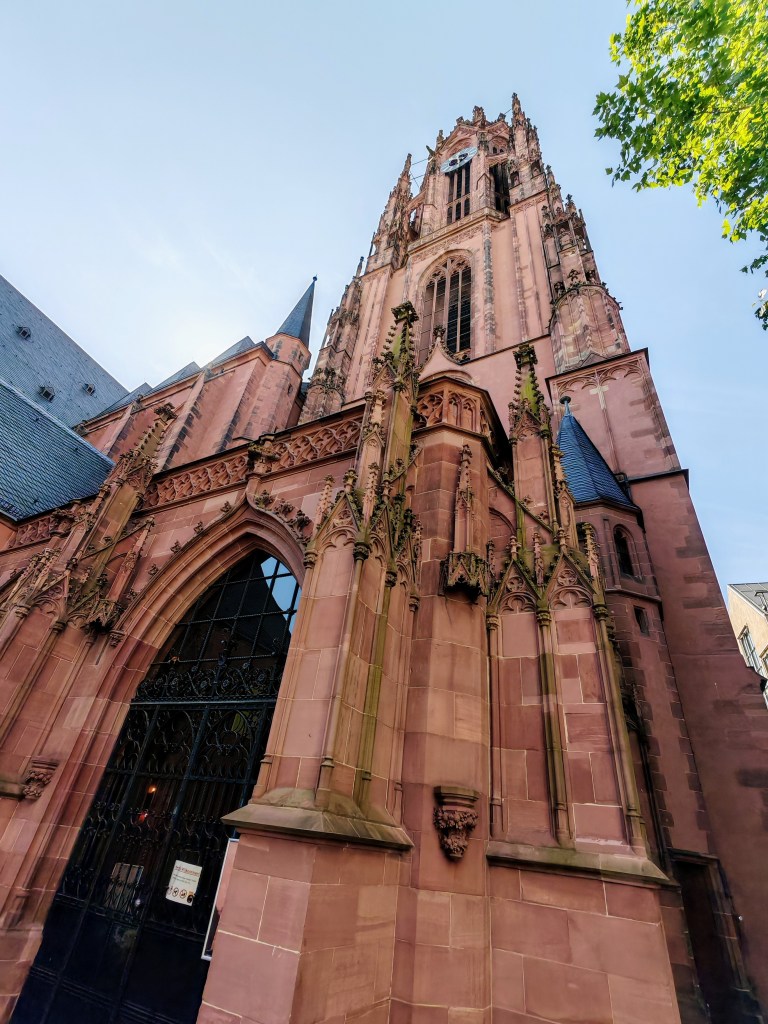
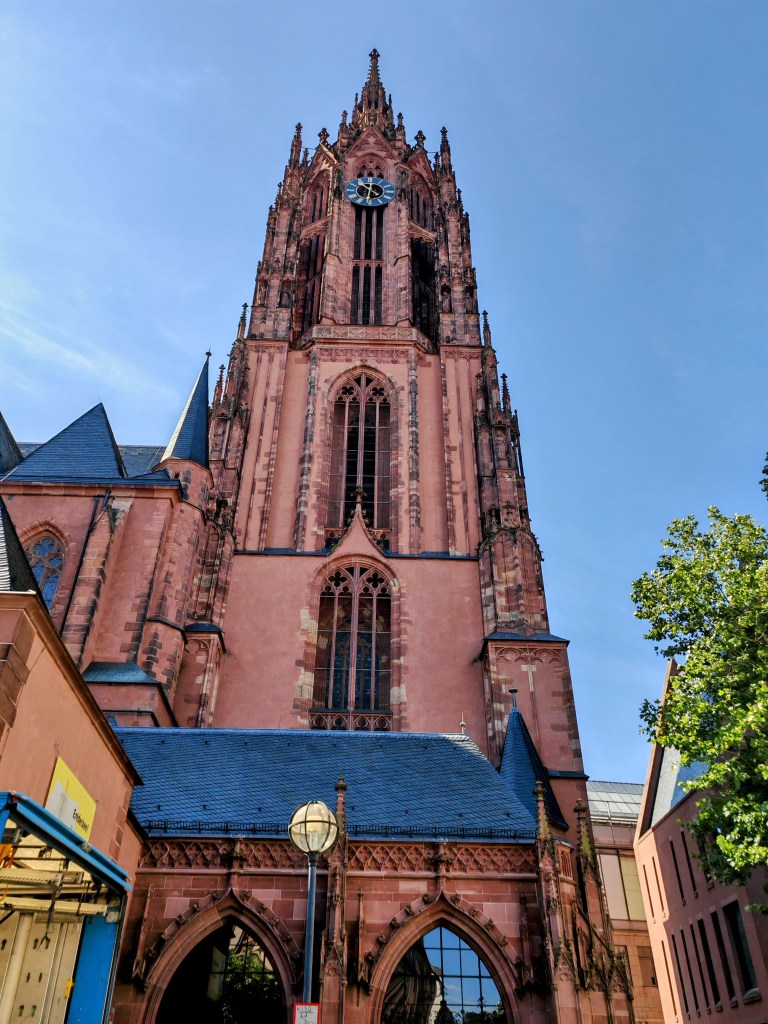
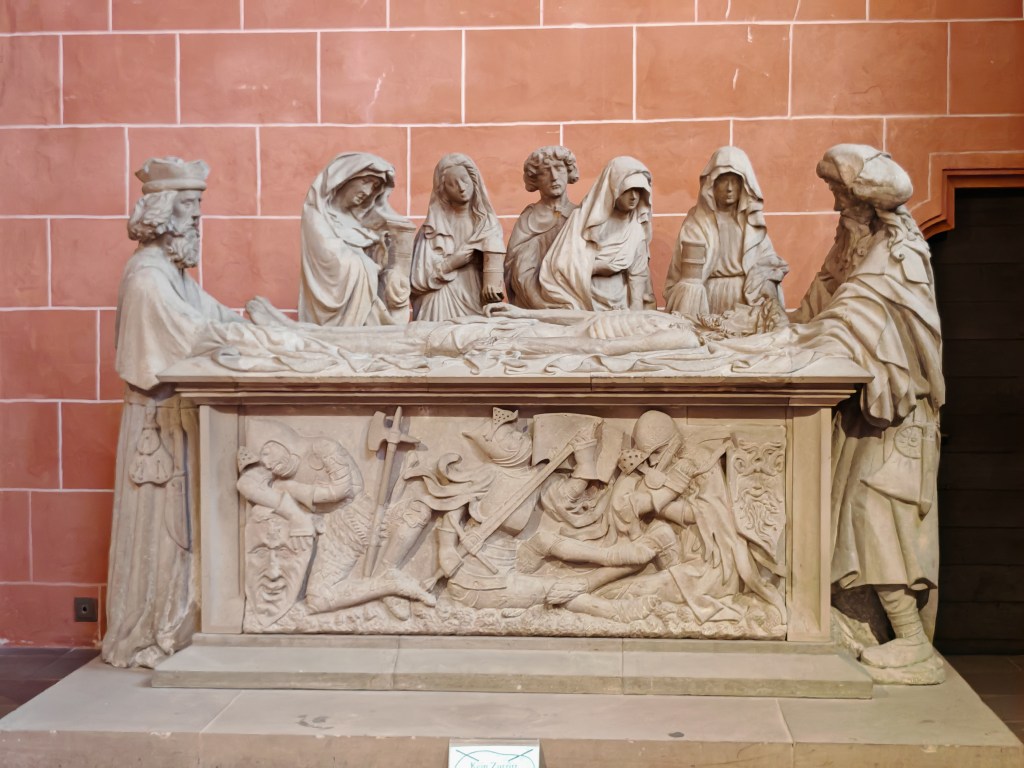
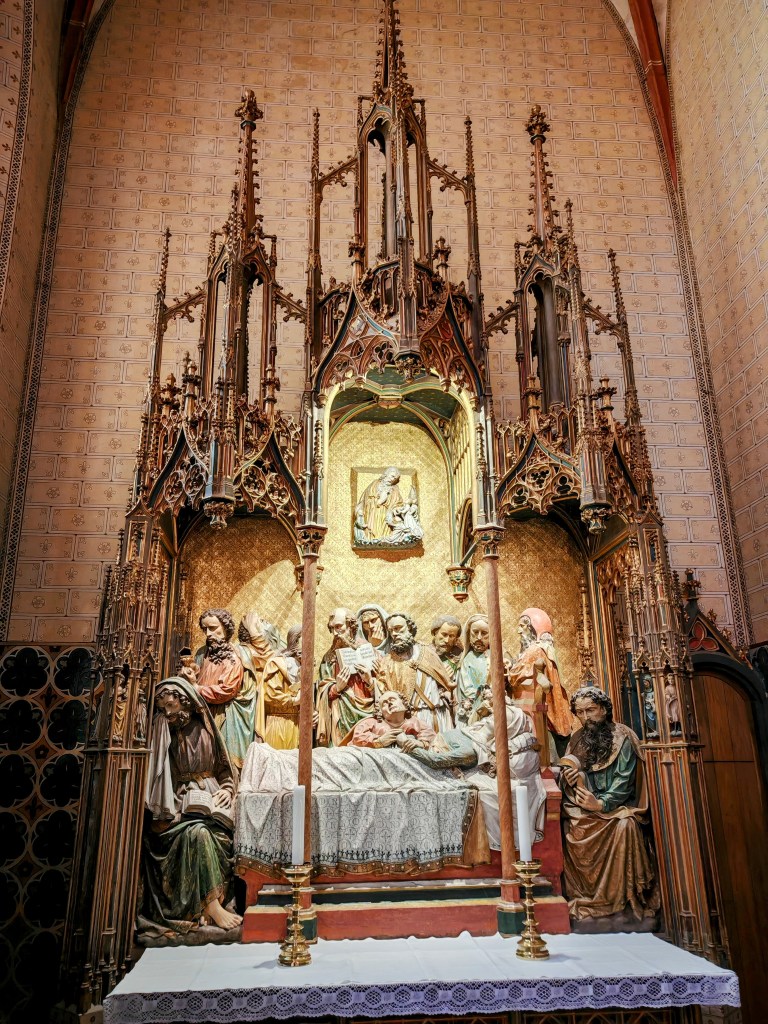
Visisted this beautiful cathedral in the center of Frankfurt yesterday. This cathedral is visible from most parts of Frankfurt. And so after my coffee yesterday morning, I walked there.
It is a beautiful church. A church has existed here since at least 700 AD. What stands here on the site is the modern version that that built in the 1400s and then reconstructed both in the 1900s and after WW2.
This church is dedicated to Saint Bartholomew.
This cathedral is also significant because it was in this cathedral, that for a few hundred years, the holy Roman emperor was elected by the 7 prince electors. And once elected as the emperor, a number of them even had their coronation ceremony here in this church.
The small room where the Holy Roman emperor was elected
There was a huge pipe organ in the church. It is a pity that I was not able to hear it being played. I am sure it would have sounded wonderful.
The huge pipe organ
I also did a church museum tour which was very informative. They showed all the various vestments that are in their collection and they are impressive. So beautiful the workmanship and they are in silk and gold thread woven. The elderly man who was manning the exhibition told me that 2 people who had adorned the vestments in that room had later gone on to become Popes. Fascinating.
The people manning the tours were nice too. Typical of the courtesy I have seen displayed throughout Germany.
There was an elderly man who was explaining to me the significance of all the exhibits in the church museum and out of the blue he said that Germany had brought violence to other countries and all that violence had then come back to Germany in the end. Very poignant.
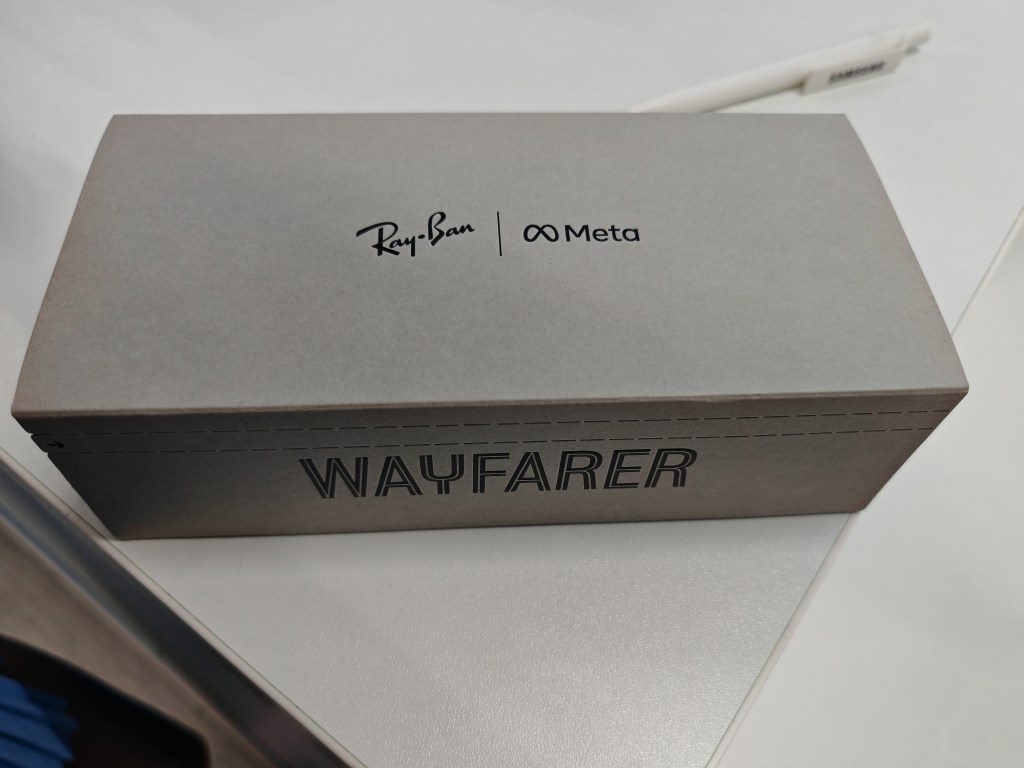
I came across these glasses in Frankfurt. I have been seeing them in many shopping places in Germany and they are advertised here quite aggressively.
I just love new gadgets and this is another one I wanted to try.
Just behind my hotel is a huge gadget shop in a mall and I saw it these glasses there again. There was a guy doing a demo for Meta products and I tried them. Quite impressed with what it can do. It’s a decent start but I can see the long term potential. It also seems a decent fit for my head. I will of course have to get the glasses changed to fit my prescription.
Lucky for me they only had 1 piece left. Apparently selling very well! And the day before they had 4. It was €329 and that was before tax refund.





 daily musings